
Education decisions deserve more than a shortlist.
Testler was built around a simple idea: before a student chooses a course, country, university or career, they need a clearer understanding of the person making that choice.
We look at education as a connected set of decisions, not a collection of deadlines, examinations and applications.
Talk to Testler ↗The hardest part is often knowing what to choose.
Students today have more options than ever. More courses. More countries. More tests. More information. More opinions. Yet having more options does not necessarily make a decision easier.
Testler exists to make that decision-making process more thoughtful. We bring together the academic, personal and practical factors that can otherwise get treated separately.
Too much information
Rankings, forums, social media and advice can create activity without necessarily creating clarity.
Decisions made too late
Subject choices, testing and meaningful experiences often become urgent only when an application deadline approaches.
Prestige replacing fit
A university can look impressive on paper while still being a poor match for a particular student's direction.
Disconnected advice
Career choices, academic planning, testing and applications are often discussed as separate problems when they influence one another.
Good guidance starts before the application.
Testler is not built around getting students to a particular destination. The destination matters, but so does the reasoning that gets them there.
Start with the student.
Academic choices make more sense when they are connected to interests, abilities, motivations and the kind of future a student is actually considering.
Scores are evidence.
A test result can tell us something useful. It should not, however, become the entire definition of a student's potential.
Build before you apply.
Strong applications are usually the result of decisions and experiences accumulated over time, not last-minute additions.
Fit matters.
The right university is not simply the most famous one. Academic environment, course structure, opportunities and personal direction all matter.
A student is more than an application.
The decisions around education are connected. What a student is curious about can influence subject choices. Those choices can influence testing and experiences. Together, they can shape the options that make sense later.
Interests
Aptitude
Academic choices
Experiences
Testing
University options
Future direction
Advice should make a decision clearer, not louder.
We value the quality of the reasoning behind an education decision as much as the decision itself.
Evidence before assumptions
We use academic information, assessment data and the student's own context rather than relying on generic expectations.
Context before comparison
A score, grade or university only becomes meaningful when considered in the context of the student and the goal.
Long-term thinking
We consider what a decision creates six months, two years or five years from now, not only what solves today's immediate problem.
Honest fit
Good guidance should be willing to question assumptions, including the assumption that the most recognisable option is automatically the right one.
Not just another piece of the education ecosystem.
Students may encounter schools, tutors, test-prep providers, admissions consultants and career counsellors at different points. Testler's role is to connect the decisions that sit between them.
A different kind of guidance starts with understanding the person, not just the profile.
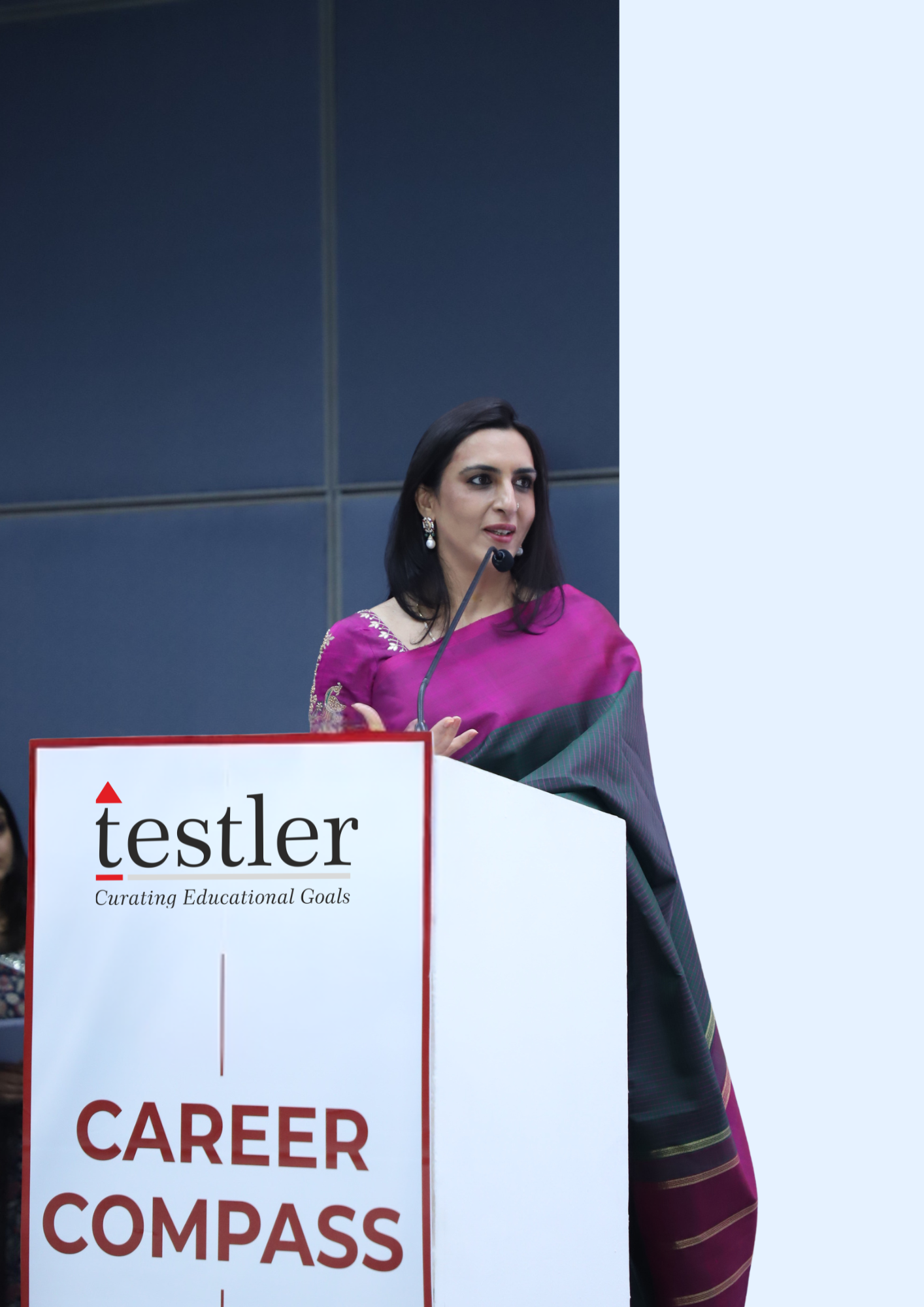
Testler was founded by Nagina Bains to bring a more connected approach to education and career decision-making. Her work sits at the intersection of psychology, education, communication and professional development.
That perspective shapes the way Testler thinks about students. Academic performance matters. So do interests, abilities, experiences, aspirations and the choices that surround them.
Rather than treating counselling, testing and university applications as isolated transactions, Testler was created to look at the student behind all of them.
The right next step depends on the student.
If you are trying to work out what that next step should be, start with a conversation.